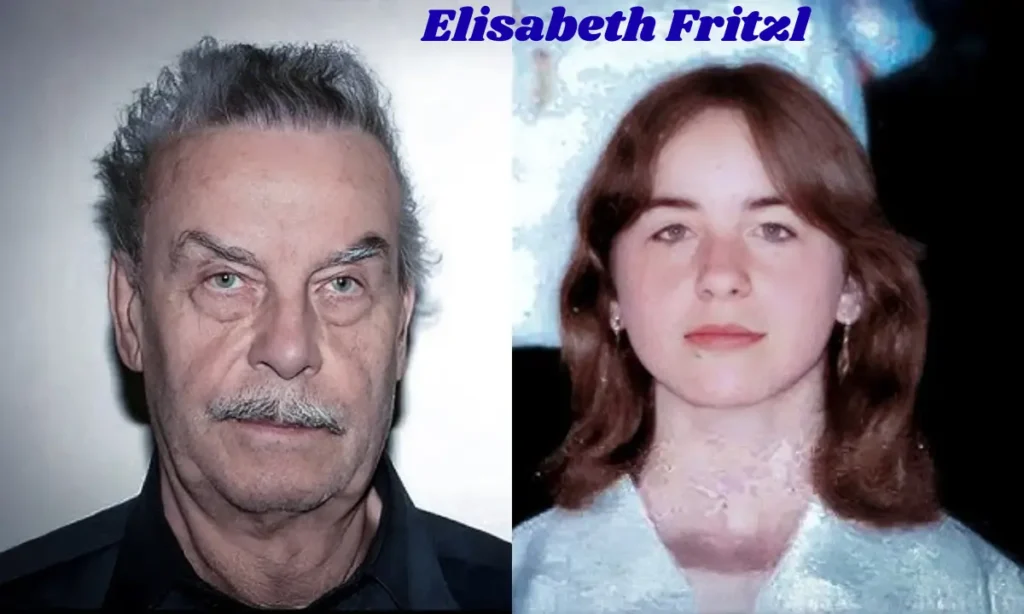
Elisabeth Fritzl’s story is still one of the most horrific cases of survival and manipulation that one can ever come across in their life. She was held captive for over two decades by her father in Amstetten, Austria while masquerading behind the facade of a normal suburban neighborhood.
This paper seeks to explore the circumstances of Fritzl’s kidnapping, her eventual liberation from captivity, and her attempts at starting a new life.
The Disappearance of Elisabeth Fritzl
Elisabeth Fritzl disappeared in August 1984 when she was 18 years old from her hometown of Amstetten, Austria. Soon after the disappearance of Elisabeth, her mother Rosemarie filed a missing person’s case.
A few weeks later, a letter was received from Elisabeth mentioning that she was tired of living with her family members and had moved out to join a cult organization, asking them not to search for her.
But it turned out later that Elisabeth had never left her family house. She had just written that letter on compulsion from her father Josef Fritzl.
Elisabeth Fritzl: Quick Profile Overview
| Attribute | Details |
| Full Name | Elisabeth Fritzl |
| Date of Birth | April 6, 1966 |
| Place of Birth | Amstetten, Lower Austria |
| Parents | Josef Fritzl and Rosemarie Fritzl |
| Period of Captivity | August 28, 1984 – April 26, 2008 (Exactly 23 years, 8 months) |
| Location of Confinement | Underground cellar complex at Ybbsstrasse 40, Amstetten |
| Children | 7 biological children born during captivity |
| Date of Rescue | April 26, 2008 |
| Current Status | Living under a government-protected identity in an undisclosed rural Austrian location |
24 Years in the Amstetten Dungeon
August 28, 1984 was the day that Josef Fritzl tricked Elisabeth into entering the basement of his home by lying that he required her help carrying a heavy door. Josef Fritzl had spent many years constructing a concealed and soundproof underground room hidden behind a reinforced security system in his basement.
Once inside the underground room, Josef made Elisabeth unconscious by placing an ether-soaked towel on her. She then lived in total darkness for the following 24 years.
Life Underground and the Children
Throughout her confinement, Elisabeth gave birth to seven children, delivering them all without medical assistance.
- The “Upstairs” Children: Josef orchestrated an elaborate ruse for three of the children. He placed them on his own doorstep with fabricated notes—allegedly from Elisabeth—claiming she could not care for them. Josef and Rosemarie legally adopted and raised these three children upstairs.
- The “Downstairs” Children: Three of the children remained in the bunker with Elisabeth, never seeing sunlight or the outside world until their eventual rescue.
- A Tragic Loss: One infant died shortly after birth due to a lack of medical attention. Josef subsequently cremated the child’s remains in the home’s furnace.
Despite the severe oppression, Elisabeth managed to teach the children in the bunker to read and write, providing them with a semblance of structure and humanity in the bleakest environment.
The Breakthrough and Rescue
Elisabeth’s release from captivity was initiated by a series of steps which began in April 2008 when the woman’s oldest daughter, 19 years old Kerstin, got severely ill in the cellar. Elisabeth managed to convince Josef to get medical assistance for her teenage daughter.
As usual, Josef took the ill Kerstin to the nearest hospital, but he maintained his regular story that Kerstin was left in the basement by her runaway sister. However, medical workers started suspecting something wrong with the teen girl since her health state was abnormal.
Having noticed it, Josef decided to take Elisabeth out of the basement to show her to the hospital workers to prove that nothing was wrong. When the hospital employees learned about what was going on, they informed the police.
Once arrested, Elisabeth insisted on telling everything about the situation only if she is guaranteed not to meet her father anymore. After many hours of persuasion from investigators’ part, the woman confessed everything.
The Trial and Aftermath
The revelation of the sophisticated system of cellars, protected by several electronic locks, confirmed the story told by Elisabeth. In March 2009, Josef Fritzl confessed to the crimes of rape, false imprisonment, incest, and murder through neglect (with respect to the child that had perished). The legal processes in the year 2024 led to his transfer from a psychiatric institution to a regular jail cell; however, petitions for early release due to dementia have been turned down by the courts of Austria.
Reclaiming a Life: Elisabeth Fritzl Today
After their ordeal, Elisabeth and the other surviving members of her family received intensive counseling and medical care at a specialist facility. To protect them from relentless media attention, the Austrian government arranged for them to be given new identities and a very private home in a remote village.
It is believed that the family managed to blend in well with their surroundings, with the children attending school while Elisabeth lived a peaceful existence out of the limelight. The case is truly exceptional and an incredible illustration of human endurance through extreme suffering.
How Josef Fritzl Kept the Dungeon Secret for 24 Years
One of the most frequent search queries surrounding this case is how a massive underground bunker could be constructed and maintained without raising red flags.
The Cold War Bunker Pretense
In the late 1970s, Josef Fritzl applied for and received official permits from local authorities to expand his cellar. Because Austria shared a border with the Soviet bloc during the Cold War, constructing fallout shelters and nuclear bunkers was highly common and even subsidized by local councils. Fritzl used this structural cover to build a soundproof, reinforced concrete fortress without alarming municipal inspectors.
The Upstairs Cover-Ups
To explain the massive displacement of earth required to expand the bunker over the years, Fritzl constructed an outdoor swimming pool in the garden directly above the cellar. This gave him a logical excuse to move tons of soil and concrete mix across the property without drawing suspicion from neighbors or his wife, Rosemarie.
The Role of Rosemarie Fritzl and the Accomplice Investigation
A major point of public skepticism and investigative focus was whether Josef Fritzl acted entirely alone, or if his wife was an active accomplice.
Official Police Findings: After extensive forensic analysis, DNA sweeps, and independent psychological evaluations, Austrian authorities officially concluded that Rosemarie Fritzl had no knowledge of the crimes occurring beneath her feet.
Strict Domestic Control
Josef Fritzl ran his household with extreme authoritarian control. He strictly forbade anyone—including his wife and renters living in the upper floors of the building—from ever entering the basement. He went down to the cellar every morning at 9:00 AM under the guise of designing mechanical blueprints for manufacturing firms, frequently staying overnight.
The Question of the 660-lb Door
Independent investigators initially doubted that Fritzl could hinge and secure the massive, 660-pound (300 kg) reinforced steel electronic cellar door by himself. However, forensic reconstruction proved that Fritzl used mechanical leverage and pulleys to install the barrier independently, ruling out structural accomplices.
The Threat of a Automated Gas System
The chilling aspect of how Elisabeth and her other children did not even try to break out of the confines of those doors when Josef was away lies in the psychological game that he had played.
Fritzl ensured that he implanted a particular narrative within the electronic security system of the house. According to him, if anyone attempted to tamper with the wires within or open the door forcefully, then poison gas will be released in the tiny living quarters. Additionally, he had ensured that touching the door was enough to shock his captives.
In reality, however, the presence of gas was never there; it was all psychological intimidation meant to keep his family in line when he was away on holidays, like his trip to Thailand in 1998.
Technical Expansion of the Cellar Complex
There is a drastic change in the structural reality of the dungeon through the span of 24 years, something that is often not considered in shallow analysis of the case.
For the first five years (1984-1989), Elisabeth was locked up in isolation in a very small space of just 375 square feet (35 square meters). However, when Fritzl had his fourth child in 1994, he realized that the size of the room was insufficient for all. Therefore, he forced Elisabeth and her children to manually excavate more soil from the room to increase its size to 590 square feet (55 square meters).
Conclusion: A Legacy of Survival and Systematic Failure
The story of Elisabeth Fritzl represents one of the most depressing examples of how dark and criminal deeds may be concealed by an illusion of a normal suburban life. For 24 years, Josef Fritzl used the atmosphere created by Cold War fears, subordination within the family, and intimidation techniques to conceal his crimes from his relatives, neighbors, and local government agencies.
However, in this case, what truly deserves attention is not the evil of the perpetrator but the incredible strength and determination of Elisabeth Fritzl. Although she was isolated, living in terrible conditions, the woman maintained her humanity, taught her children, and waited for the opportunity to use her only chance – the moment when she had to seek urgent medical help.
Nowadays, the cellar of the Amstetten house, filled with concrete, stands as a symbol of the erasure of the atrocities committed there, allowing the victims to have complete privacy after more than two decades spent in captivity. At the same time, this case has become an important lesson for police and social workers worldwide about the significance of examining unusual stories at home.
FAQs
Did the downstairs children know other people existed?
The three children raised in the cellar (Kerstin, Stefan, and Felix) had no direct human contact other than Elisabeth and Josef.
What happened to the house where the family lived?
The multi-apartment building located at Ybbsstrasse 40 in Amstetten remained vacant for years after the discovery. In 2013, the underground bunker complex was completely filled with liquid concrete to prevent it from becoming a macabre tourist attraction.
Also read: The Real Lisa Aguilar: The True Story Behind Lifetime’s “A Husband to Die For”